Butterfly 3D Floral 20 Oz Skinny Tumbler: A Guide to Flawless Sublimation Results
There is a distinct charm in transforming a plain metal cup into a piece of art that feels like it belongs in a sun-drenched cottage garden. The Butterfly 3D Floral 20 Oz Skinny Tumbler design captures this aesthetic perfectly, blending soft watercolor tones with delicate butterfly illustrations. For creators, small business owners, and DIY enthusiasts, this digital wrap offers a way to bring nature-inspired beauty directly to drinkware. However, the difference between a stunning, professional-looking product and a disappointing, pixelated mess often comes down to how well you understand the file specifications and the sublimation process itself.
Many people dive into sublimation printing excited by the visual appeal of a design but overlook the technical requirements needed to execute it properly. When working with a specific format like the Butterfly 3D Floral 20 oz Skinny Tumbler 3D 20 Oz Tumbler Wrap PNG, assuming that any floral image will work on any tumbler is a costly error. Understanding the nuances of this digital product ensures your final creation matches the high-quality vision you have in mind.
The Importance of Matching File Specs to Your Hardware
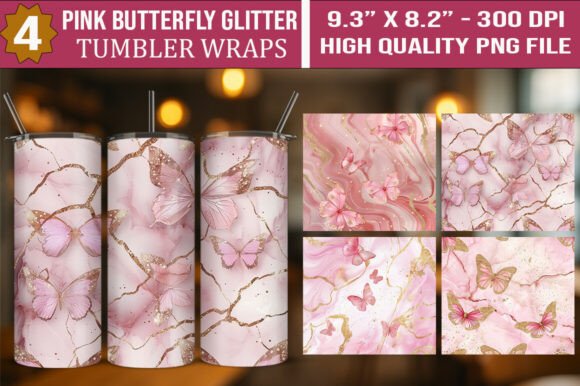
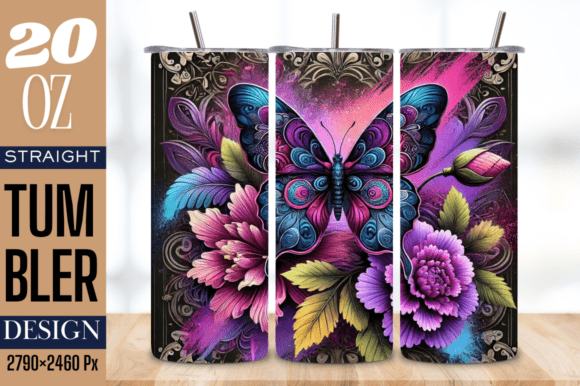
One of the most common misunderstandings among beginners is the belief that "high resolution" is a universal standard. In reality, resolution is meaningless without context regarding the physical size of the object being printed. The Butterfly 3D Floral 20 Oz Skinny Tumbler wrap is specifically engineered with dimensions of 9.3″ x 8.2″ at 300 DPI (2790 x 2460 pixels). This precision is not arbitrary; it is calculated to fit the exact surface area of a straight-sided 20 oz skinny tumbler without distortion.
If you attempt to stretch this design onto a tapered tumbler or a wider 20 oz straight tumbler, the aspect ratio will be compromised. The butterflies may appear elongated, and the floral patterns could warp near the edges. Conversely, using a low-resolution image found elsewhere and scaling it up to fit these dimensions will result in visible pixelation once the heat press applies pressure. The ink spreads slightly during sublimation, and if the source file lacks sufficient pixel density, the final print will look muddy rather than crisp.
To avoid this, always verify the physical dimensions of your blank tumbler before purchasing a digital wrap. Measure the circumference and height of the printable area. If your tumbler is a standard 20 oz skinny straight model, this design is an ideal match. If you are working with a different shape, such as a curved or tapered vessel, you will need a design explicitly created for those contours. Using the wrong template leads to wasted blanks, ink, and time—resources that are better spent on perfecting your craft.
Navigating Color Variations and Printer Settings
Another area where expectations often clash with reality involves color reproduction. The description notes that colors may vary slightly due to monitor and printer settings, a disclaimer that is frequently skimmed over but critically important. What looks like a vibrant, soft pink on your calibrated studio monitor might print as a dull mauve if your printer profile is not correctly configured for sublimation paper and ink.
The Butterfly 3D Floral 20 Oz Skinny Tumbler features hand-painted illustrations in soft, watercolor tones. These subtle gradients rely heavily on the smooth transition of ink droplets. If your printer is set to a generic photo setting rather than a specific sublimation profile, the colors may appear too saturated or lack depth. Furthermore, different brands of sublimation ink react differently to heat. Some inks require higher temperatures to fully release the dye, while others can scorch at lower settings.
A practical approach to mitigating color discrepancies is to run test prints on scrap paper or spare tumblers before committing to a full batch. Print a small swatch of the design, apply it to a blank, and observe the result under natural light. Adjust your ICC profiles or printer driver settings based on what you see, not just what you expect. This iterative process is essential for maintaining consistency, especially if you are producing items for a small business where brand reliability matters.
Understanding the Digital Nature of the Product
It is vital to remember that this is a digital product. No physical item will be shipped. This distinction changes the workflow significantly compared to buying pre-printed merchandise. You are responsible for every step of the production chain, from downloading the PNG file to applying the heat press. This autonomy allows for endless customization but also places the burden of quality control entirely on you.
When you download the Butterfly 3D Floral 20 oz Skinny Tumbler 3D 20 Oz Tumbler Wrap PNG, ensure you are saving the file in its original state. Do not compress the image through email or social media platforms, as this can degrade the quality and introduce artifacts. Keep the file in its native 300 DPI format until the moment of printing. Additionally, because the background is transparent, ensure your editing software handles transparency correctly so that white borders do not accidentally appear around your design when printed.
For entrepreneurs looking to scale, having a reliable digital asset like this is efficient. Once you have perfected your heat press settings and color calibration, you can reproduce the design consistently. However, if you skip the initial testing phase, you risk producing a batch of products that do not meet customer standards. The cost of a few failed tests is negligible compared to the cost of a ruined inventory.
Choosing the Right Application Method
The success of the Butterfly 3D Floral 20 Oz Skinny Tumbler design also depends on the application method. While the file is sized for a straight wrap, the technique used to transfer it matters. Using a heat tape that is too wide can leave residue on the finished product, while tape that is too narrow may fail to secure the paper during the pressing cycle.
Ensure your heat press is capable of wrapping around the cylinder evenly. If you are using a clamp-style press, check that the pressure is distributed uniformly around the tumbler. Uneven pressure results in ghosting or incomplete transfers, particularly in the delicate areas of the watercolor flowers. It is also crucial to use high-quality sublimation paper designed for tumblers. Cheaper papers may not hold the ink effectively, leading to bleeding or fading after washing.
Before making a final decision to use this design for a client order or a retail listing, consider your current equipment capabilities. If you are new to sublimation, start with a single unit to refine your process. Check that your oven or mug press reaches the required temperature accurately, as even a ten-degree variance can alter the outcome. By respecting the technical details of the Butterfly 3D Floral 20 Oz Skinny Tumbler wrap and adhering to best practices in sublimation, you can create durable, beautiful drinkware that truly stands out.