Elegant Ceramic Style 3D Vase: A Digital Design Evaluation
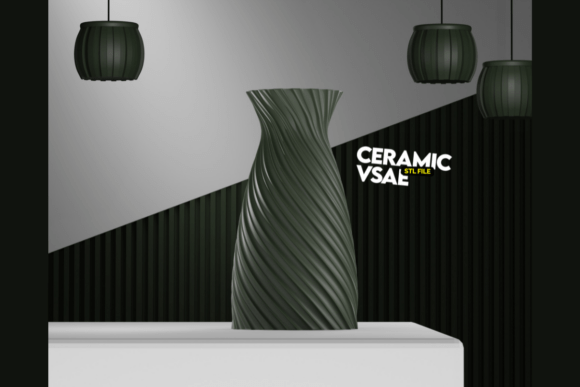
The Elegant Ceramic Style 3D Vase represents a specific category of digital assets designed for additive manufacturing. Unlike traditional pottery, this object exists initially as a high-resolution .STL file, containing the geometric data necessary to reproduce a ceramic-inspired spiral form through 3D printing technologies. This design mimics the fluidity and smooth twist of hand-thrown clay but achieves its structure through precise digital sculpting. For makers, interior designers, and hobbyists, understanding the nuances of this digital product is essential before committing to the download and subsequent print process.
Understanding the Digital Product
It is crucial to clarify that the Ceramic Style 3D Vase – Elegant Spiral STL File is not a physical item. The purchase grants access to a computer-aided design (CAD) file intended for use with slicing software. This distinction fundamentally changes the value proposition. The buyer receives the blueprint, not the finished vase. The final aesthetic, texture, and durability depend entirely on the printer capabilities, material selection, and post-processing techniques employed by the user.
The design itself focuses on a minimalist centerpiece concept. The spiral geometry is engineered to create visual depth without requiring complex support structures in many orientations, though specific printer settings will vary. The "ceramic style" refers to the visual language of the model—smooth curves and organic lines—rather than the inherent material properties of the file. Users must apply these characteristics through their choice of filament or resin.
Reasons for Interest and Potential Applications
Several factors drive interest in the Elegant Ceramic Style 3D Vase. Primarily, it offers a solution for those seeking custom home decor that aligns with modern, minimalist aesthetics. The spiral motif acts as a dynamic focal point, suitable for entryways, dining tables, or office desks where a sleek accent is required.
- Customization: Users can scale the vase to fit specific spatial constraints, a flexibility impossible with mass-produced retail items.
- Material Versatility: The design is compatible with Fused Deposition Modeling (FDM), Stereolithography (SLA/resin), and specialized ceramic filaments, allowing for varied finishes ranging from matte plastic to textured stone-like surfaces.
- Commercial Viability: For small businesses, the license often permits commercial printing, enabling creators to produce inventory for local markets or online shops without upfront tooling costs.
- Gifting: The ability to print multiple units allows for personalized gifts where the recipient's preferred color or size can be accommodated directly during production.
Benefits and Tradeoffs
Adopting a digital approach to home decor offers distinct advantages, yet it introduces specific tradeoffs that require careful consideration. The primary benefit is cost efficiency over volume. While the initial investment involves purchasing the STL file and potentially upgrading hardware, the marginal cost of producing additional vases is low compared to buying individual units from a retailer.
However, the tradeoff lies in the time and technical skill required. Printing a large, seamless spiral vase demands patience. In FDM printing, layer lines may be visible unless the nozzle diameter is small and the layer height is optimized. Resin printing offers smoother surfaces but requires handling hazardous chemicals and significant post-curing time. Furthermore, if the user lacks experience with slicer settings, the first few prints may fail, leading to wasted material and time.
Another consideration is the structural integrity. While the design is aesthetically pleasing, 3D-printed objects generally lack the tensile strength of fired clay. They are best suited for decorative purposes rather than holding heavy bouquets or wet arrangements for extended periods, especially when printed in standard PLA or PETG.
Situations Where the Design is a Strong Fit
The Elegant Ceramic Style 3D Vase is an excellent choice for users who possess a functional 3D printer and enjoy the process of fabrication. It fits well in scenarios where:
- Aesthetic Control is Priority: The user wants a specific color gradient, texture, or size that is unavailable in standard retail catalogs.
- Batch Production is Needed: An event planner or boutique owner needs ten identical vases in a specific shade; printing them in-house is more economical than sourcing them individually.
- Experimental Learning is Desired: Hobbyists looking to test new materials, such as wood-infused PLA or flexible TPU, can use this geometric shape to evaluate how different filaments handle curves and spirals.
- Sustainability is a Goal: Reducing shipping emissions by manufacturing locally at home aligns with eco-conscious consumer values.
When Alternatives May Be Worth Considering
Despite its versatility, the digital vase file is not the optimal solution for every situation. Buyers should consider alternatives if:
- Immediate Gratification is Required: If a vase is needed today for an event happening tomorrow, the time required for slicing, printing, and curing makes a physical store purchase the only viable option.
- No Hardware Exists: Purchasing an STL file without owning a 3D printer negates all benefits. Unless the user plans to outsource the printing service—which adds cost and reduces control—the file provides no utility.
- Structural Durability is Critical: For outdoor use or environments with high humidity and temperature fluctuations, traditional ceramics, glass, or treated metals offer superior longevity compared to most 3D printing polymers.
- Budget Constraints Prevent Upgrades: Achieving a truly "ceramic" look often requires high-end printers or expensive composite filaments. If the budget is limited to basic PLA, the final result may appear distinctly plastic rather than elegant.
Practical Decision-Making Insights
To determine if the Elegant Ceramic Style 3D Vase aligns with your goals, conduct a quick audit of your resources and expectations. First, verify your printer's build volume. Large vases may exceed the Z-axis of desktop machines, requiring assembly of multiple parts which can compromise the seamless spiral aesthetic.
Second, evaluate your willingness to post-process. To achieve the "ceramic" finish described in the design intent, sanding, priming, and painting are often necessary steps after printing. If you prefer a raw, industrial look, the vase works as-is. If you desire a polished, gallery-ready piece, factor in the hours of finishing work required.
Finally, review the licensing terms carefully. Ensure the license covers your intended use, whether it is strictly personal decoration or commercial resale. Understanding these boundaries prevents legal complications and ensures the asset serves your long-term objectives.
In conclusion, the Ceramic Style 3D Vase – Elegant Spiral STL File is a powerful tool for those equipped to translate digital designs into physical reality. It bridges the gap between modern technology and classic design forms, offering customization and scalability. However, its value is contingent upon the user's technical capability and willingness to invest time in the manufacturing process. For the prepared maker, it is a versatile addition to a portfolio of home decor projects; for the unprepared, it remains merely a file on a hard drive.