Firefighters Elements 3D SVG: A Practical Evaluation
The Firefighters Elements 3D SVG collection represents a specific category of digital assets designed for creators who utilize cutting machines and graphic design software. These files are structured to simulate depth and dimensionality within a vector format, allowing users to create layered designs that appear three-dimensional when cut from various materials. For individuals researching digital resources for crafting, understanding the technical specifications, compatibility, and practical applications of these files is essential before making a purchase or download decision.
Understanding the Format and Structure
At its core, an SVG (Scalable Vector Graphics) file is a resolution-independent image format defined by mathematical paths rather than pixels. The "3D" designation in Firefighters Elements 3D SVG does not imply a true three-dimensional model like those found in CAD software. Instead, it refers to a design technique where multiple layers of the same shape are stacked with slight offsets. When these layers are cut from different colored materials and assembled, the result mimics a shadow box or pop-up effect, creating visual depth.
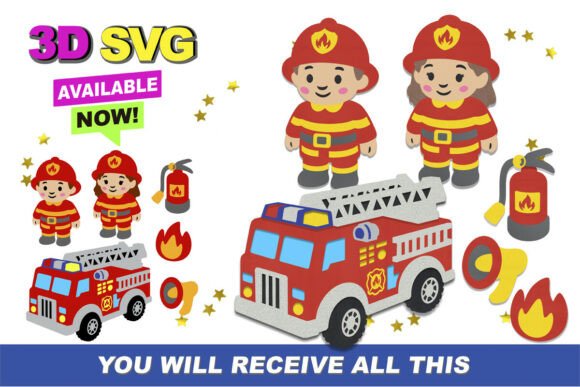
These collections typically arrive as a zipped folder containing individual SVG files. This packaging ensures that all necessary layers are organized and ready for import into design software. The content usually includes iconic firefighter imagery such as helmets, axes, hooks, fire trucks, hydrants, and protective gear. Because the files are vector-based, they can be scaled up or down without losing quality, making them versatile for projects ranging from small stickers to large vinyl decals.
Compatibility and Software Requirements
One of the primary considerations for potential users is software compatibility. The Firefighters Elements 3D SVG files are optimized for industry-standard platforms like Silhouette Studio and Cricut Design Space. These programs are widely used by hobbyists and professionals alike for managing vector cuts. When importing the zipped folder, users should unzip the contents first to access the individual SVG files. Once imported, the software allows for the manipulation of layers, color changes, and size adjustments.
However, compatibility extends beyond just the two major brands mentioned. If you are using another type of cutting machine, such as those from Brother, ScanNCut, or Graphtec, you must verify that your specific software supports SVG imports. Some proprietary machines may require conversion to their native file formats (such as .gcode or .dst) before the design can be processed. It is prudent to test a single file from the collection on your machine before committing to a full project to ensure the paths are recognized correctly and the layering functions as intended.
Practical Applications and Use Cases
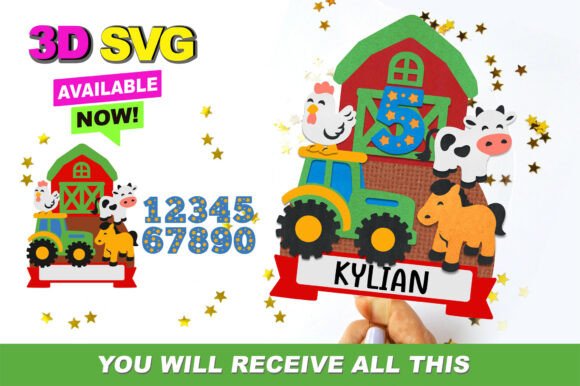
The versatility of these digital files makes them suitable for a wide array of creative projects. One common application is the creation of cake toppers. By cutting the layered elements from cardstock or edible paper, bakers can add a dimensional touch to celebration cakes, particularly for birthdays honoring firefighters or themed parties. The precision of the vector lines ensures clean edges, which is critical for food-safe decorations.
Beyond baking, these designs are frequently used for apparel customization. Users can print the designs on transfer paper or cut heat-transfer vinyl (HTV) to decorate t-shirts, hoodies, and hats. The 3D effect adds a premium look to custom merchandise, distinguishing it from standard flat prints. Additionally, the files are excellent for producing stickers. Whether laminated for durability or printed on matte vinyl, the layered aesthetic stands out on water bottles, laptops, and journals.
Other potential uses include home decor, such as wall art or window clings, and organizational labels for fire stations or emergency response vehicles. The ability to scale the design means the same file set can produce a small pin badge or a large banner, offering significant flexibility for event planning and commemorative gifts.
Benefits and Tradeoffs
There are distinct advantages to utilizing Firefighters Elements 3D SVG files over other design methods. The primary benefit is efficiency. Creating a multi-layered 3D effect from scratch requires significant time and design skill. Pre-made SVG files provide a ready-to-use solution that saves hours of drafting and alignment work. Furthermore, the vector nature of the files guarantees crisp lines regardless of the final output size, eliminating the pixelation issues often associated with raster images like JPEGs or PNGs.
However, there are tradeoffs to consider. The main limitation is the requirement for a compatible cutting machine and software. Unlike simple printable PDFs, SVG files cannot be used without the appropriate digital workflow. Additionally, the "3D" effect relies on physical assembly. The user must cut each layer separately and adhere them together, which increases material usage and labor time compared to a single-layer cut. If speed and minimal effort are the top priorities, a simpler 2D design might be more appropriate.
When Alternatives May Be Worth Considering
While the Firefighters Elements 3D SVG collection is robust, it may not be the ideal choice for every situation. If a user lacks access to a cutting machine or prefers hand-cutting techniques, these files offer little utility. In such cases, high-resolution raster images or printable templates would be a better fit. Similarly, if the project requires complex gradients or photographic realism, vector SVGs are not suitable, as they rely on solid colors and defined paths rather than continuous tones.
Another scenario where alternatives should be considered is when strict budget constraints limit material costs. Since 3D designs require multiple layers of material, the cost per unit increases significantly compared to single-layer cuts. For large-scale production runs where minimizing waste and material expense is critical, a simplified silhouette version of the firefighter elements might yield better economic results.
Decision-Making Insights
To determine if this resource aligns with your goals, evaluate your current equipment and project requirements. Ask yourself if you have the necessary software to manipulate vector layers and a machine capable of precise cutting. Consider the end product: does the added dimension of a 3D design enhance the value of your item, or is a flat design sufficient? If you are creating personalized gifts for a firefighter appreciation event, the extra effort involved in assembling the layers often justifies the enhanced visual impact.
Furthermore, assess your familiarity with layer management. While the files are easy to use in Silhouette Studio and Cricut Design Space, beginners may need to spend time learning how to ungroup layers and manage alignment. If you are new to digital crafting, starting with a smaller subset of the collection to practice before undertaking a complex project is a wise strategy.
In conclusion, the Firefighters Elements 3D SVG collection offers a practical solution for creators seeking to add depth and professionalism to their projects. By understanding the technical requirements and weighing the benefits against the tradeoffs, users can make informed decisions about whether these files meet their specific needs for cake toppers, apparel, stickers, and other celebratory items.