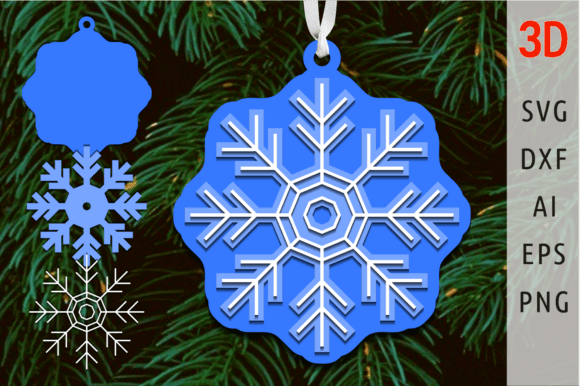
Mastering the 3D Snowflake SVG: Your Ultimate Guide to Layered Christmas Ornaments
As the holiday season approaches, the desire to create unique, handmade decorations becomes a top priority for crafters, small business owners, and DIY enthusiasts alike. Among the most popular winter motifs is the snowflake, but moving beyond simple flat cutouts to creating stunning, dimensional designs requires a shift in both technique and resources. Enter the 3D Snowflake SVG Christmas Ornament. This digital asset represents more than just a picture; it is a sophisticated tool designed to transform standard crafting materials into professional-grade, layered masterpieces.
Understanding how these digital files work, what they contain, and how to utilize them effectively can elevate your holiday projects from basic to breathtaking. Whether you are using a Cricut machine, a Silhouette Cameo, or other cutting software, this guide will walk you through the intricacies of layered ornament designs, file formats, and the creative possibilities they unlock.
What Is a Layered 3D Snowflake SVG?
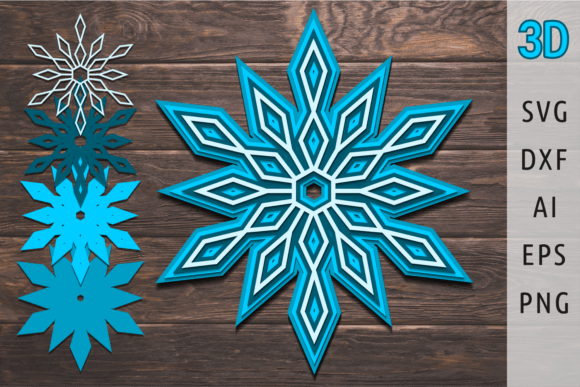
To truly appreciate the value of a layered Christmas ornament 3d snowflake svg, one must first understand the concept of layering in digital design. Unlike a standard single-layer image that cuts out as one flat piece, a layered design consists of multiple separate components stacked on top of one another. Each layer corresponds to a different depth or element of the final image.
In the context of a 3D snowflake ornament, these layers might include:
- The Base Layer: Often a solid circle or hexagon that serves as the background.
- Mid-Layers: Intricate snowflake patterns that add texture and complexity.
- Top Layers: Highlight details, glitter accents, or hanging loops.
When these individual pieces are cut from various materials—such as cardstock, vinyl, felt, or wood—and assembled, they create a physical object with actual depth. This "3D" effect catches the light differently than a flat cutout, adding a tactile quality that makes your ornaments stand out on the tree or as part of a centerpiece.
The Digital Advantage: Instant Download and Versatility
One of the primary benefits of purchasing a digital image packaged in a Zip archive is the immediacy and flexibility it offers. In the modern crafting landscape, time is often a luxury. With an instant download, there is no waiting for shipping, no risk of lost packages, and no environmental footprint associated with physical logistics. You receive your files the moment you complete your purchase, ready to be used immediately.
This digital product is specifically engineered for compatibility with the most popular cutting software on the market. Whether you are a seasoned pro or a beginner just opening your machine for the first time, these files are optimized for:
- Cricut Design Space: The go-to platform for millions of hobbyists.
- Silhouette Studio: Preferred by those seeking advanced vector editing capabilities.
- Sure Cuts A Lot (SCAL): A powerful option for users who prefer desktop-based control.
It is crucial to remember that this is a digital product only. No physical product will be shipped. Instead, you are purchasing the intellectual property rights to use the design within the terms of your license, allowing you to produce as many physical ornaments as your heart desires.
Decoding the File Formats: Why So Many Options?
A common question among beginners is why a single design comes with so many different file types. The answer lies in the diverse needs of the crafting community and the varying requirements of different machines and software. The zip archive typically includes a comprehensive suite of formats to ensure maximum usability:
Vector Files: The Foundation of Precision
Vector files are the gold standard for cutting machines because they define shapes using mathematical paths rather than pixels. This ensures that no matter how large or small you scale the snowflake, the edges remain crisp and clean.
- SVG (Scalable Vector Graphics): The universal language of web and cutting machines. It is lightweight, scalable, and widely supported.
- DXF (Drawing Exchange Format): Often preferred by older Silhouette models or specific industrial cutters.
- AI (Adobe Illustrator): Ideal for designers who need to edit the source file, change colors, or modify the geometry before cutting.
- EPS (Encapsulated PostScript): A versatile vector format compatible with many professional design applications.
Raster Files: For Visualization and Printing
While vectors are for cutting, raster files are essential for visualization, printing templates, or sublimation.
- PNG (Portable Network Graphics): Provided at 300dpi with a transparent background, these high-resolution images allow you to see exactly how the layers align. They are perfect for mockups or if you wish to print the design onto paper or fabric before cutting.
- JPG (Joint Photographic Experts Group): Useful for quick previews or sharing on social media without the transparency requirement.
- PDF (Portable Document Format): Often provided in A4 format, these are excellent for laser engraving machines or for printing precise templates to trace by hand.
Practical Applications: From Home Decor to Small Business
The versatility of a 3D snowflake SVG extends far beyond personal holiday decoration. In today's economy, creativity is a currency, and these digital assets can serve as the backbone of a profitable side hustle or a full-fledged business.
Elevating Home Decor
For the home crafter, these files offer a way to personalize your space. Imagine a set of ornaments where each layer is cut from a different color of metallic cardstock, creating a shimmering gradient effect. Or, consider using clear acetate for the middle layers to give the snowflake a stained-glass appearance when hung near a window. The ability to mix and match materials allows for infinite customization that mass-produced store-bought items simply cannot match.
Entrepreneurial Opportunities
Small business owners selling on Etsy, at craft fairs, or via local markets find immense value in these layered designs. Because the files are digital, the cost of goods sold is low—you pay once for the file and then only for the materials (paper, glue, ribbon). This high margin potential makes layered ornaments a staple for holiday inventory.
Furthermore, the "3D" aspect adds perceived value. Customers are often willing to pay a premium for an item that looks complex and handmade. By utilizing the multi-layer capability of the SVG, you can create products that justify higher price points compared to simple flat decals.
Common Misunderstandings and How to Avoid Them
Despite their utility, there are some misconceptions surrounding digital cutting files that can lead to frustration if not addressed early.
Misconception 1: "The File Will Cut Automatically"
Many new users assume that importing an SVG will result in a perfect cut immediately. However, layered files often require preparation. You may need to ungroup layers, adjust the order of operations, or apply "weld" or "contour" functions depending on your software. Understanding the basics of your cutting software is essential to unlocking the full potential of the file.
Misconception 2: "All Machines Can Cut Every Layer"
While the file is compatible with major software, the physical limitations of your machine matter. Extremely intricate inner details of a snowflake might be too small for certain blades or materials. Always perform a test cut on scrap material to ensure your blade depth and pressure settings are correct for the specific thickness of the paper or vinyl you are using.
Misconception 3: "PNG Files Are for Cutting"
Beginners sometimes try to cut PNG files directly. Remember, PNGs are pixel-based images. While they look great on screen, they do not have the vector paths required for a cutting machine to follow. Always use the SVG, DXF, or EPS files for cutting tasks.
Getting Started: A Step-by-Step Overview
To begin your journey with a 3D Snowflake SVG, follow this logical workflow:
- Download and Extract: Save the Zip archive to your computer and unzip it to access all the file formats.
- Select Your Software: Open your preferred program (e.g., Cricut Design Space) and import the SVG file.
- Review the Layers: Inspect the design to ensure all layers are present and correctly aligned. Use the PNG preview to verify the intended look.
- Prepare Materials: Choose your base and accent materials. Consider using adhesive foam tape between layers to enhance the 3D effect.
- Test Cut: Run a small test on a scrap piece of your chosen material to dial in your machine settings.
- Assemble: Once all pieces are cut, carefully stack and adhere them according to the design hierarchy.
Conclusion: Embracing the Future of Holiday Crafting
The 3D Snowflake SVG Christmas Ornament is more than just a digital file; it is a gateway to creativity, efficiency, and professional-quality results. By understanding the technology behind the layers, the significance of the various file formats, and the practical applications in both home and business settings, you empower yourself to create holiday magic that is uniquely yours.
Whether you are looking to save money on decorations, start a festive side business, or simply enjoy the therapeutic process of crafting, these layered digital assets provide the foundation for success. As technology continues to integrate into our daily lives and hobbies, tools like these bridge the gap between imagination and reality, allowing us to bring the beauty of winter into our homes with precision and style.
So, the next time you browse for holiday inspiration, remember that the key to a standout ornament isn't just the design itself, but the method of creation. With the right 3D snowflake svg and a little know-how, your holiday decor will shine brighter than ever before.