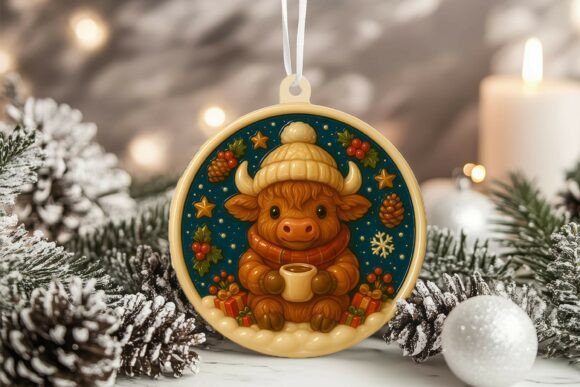
3D Porcelain Highland Cow Xmas Ornament: A Practical Guide for Creators and Crafters
The holiday season represents a unique convergence of creativity, commerce, and personal expression. For small business owners, graphic designers, and DIY enthusiasts, the demand for distinctive seasonal decor drives significant activity in the digital asset market. Among the most sought-after designs is the 3D Porcelain Highland Cow Xmas Ornament. This specific digital file format offers a versatile foundation for creating physical products that range from traditional tree decorations to custom apparel. Understanding how to integrate this asset into a production workflow requires more than just downloading a file; it demands a strategic approach to resolution, compatibility, and application methods.
Understanding the Digital Asset Specifications
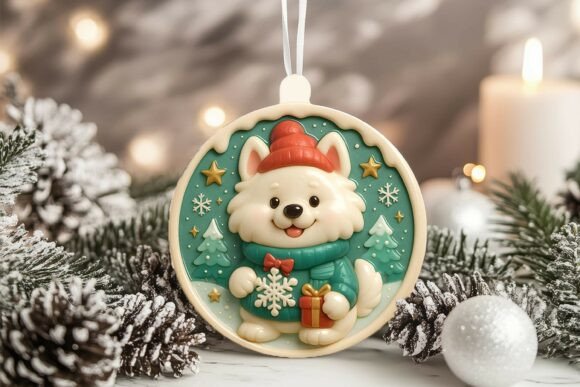
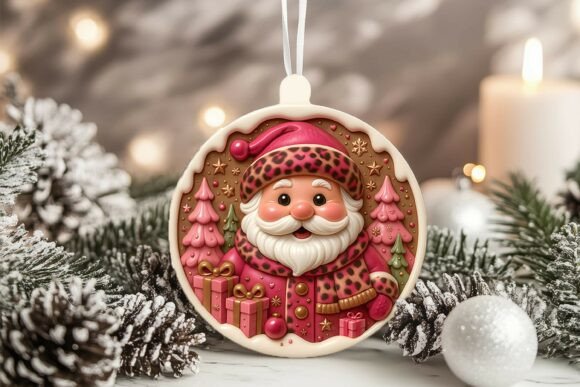
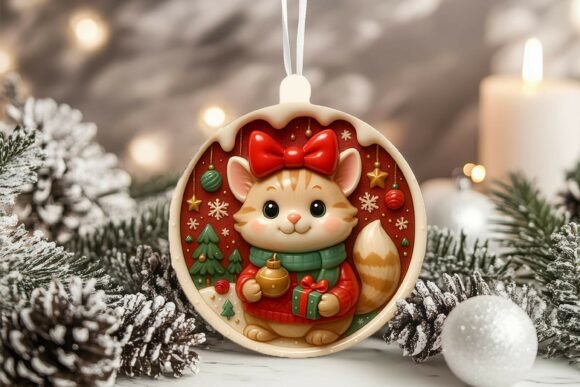
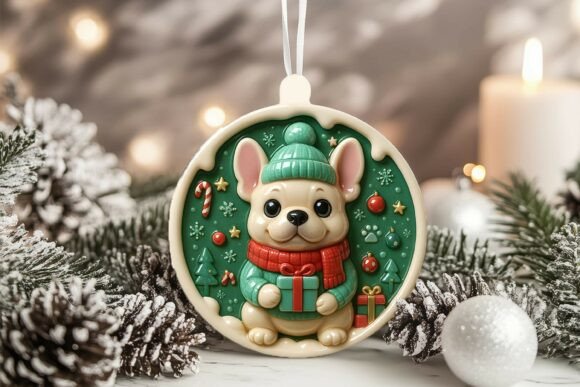
Before integrating any digital resource into a project, a thorough evaluation of its technical specifications is essential. The 3D Porcelain Highland Cow Xmas Ornament 3D Christmas Ornament PNG is designed with professional workflows in mind. Unlike vector formats such as SVG, which rely on mathematical paths, this asset is a high-resolution raster image. It is delivered as a Circle Ornament with a transparent background, measuring approximately 5 x 5 inches on the longest side at 300dpi resolution.
The 300dpi (dots per inch) standard is critical for print quality. In the realm of physical product creation, lower resolutions result in pixelation and loss of detail, particularly when scaling images for larger applications like wall decor or t-shirts. This specific file ensures that the intricate details of the porcelain texture and the Highland Cow's features remain crisp. However, users must recognize that this is a DIGITAL product. The delivery mechanism is a ".ZIP" file, requiring basic computer literacy to extract. Both PC and Mac users must be comfortable using built-in archive utilities or third-party software to unzip files before they can access the design.
It is also important to manage expectations regarding color fidelity. Because screens use RGB color profiles while printers utilize CMYK, colors may vary depending on devices and printers. A professional workflow includes testing a small print run to calibrate colors before committing to a full production batch. This step ensures consistency across all finished goods, whether they are mugs, stickers, or cards.
Integration into Creative Workflows
The versatility of the 3D Porcelain Highland Cow Xmas Ornament allows it to fit seamlessly into various stages of a creative process. For entrepreneurs planning their holiday inventory, this asset serves as a core component during the product development phase. Instead of commissioning custom artwork, which can be time-consuming and expensive, utilizing a pre-designed, high-quality PNG accelerates the timeline from concept to market.
In a sublimation workflow, the process begins with importing the PNG into design software compatible with the printing method. Since the background is transparent, the design can be layered over mockups of ceramic ornaments, coffee mugs, or tote bags without manual masking. This saves hours of editing time. For those engaging in Direct-to-Garment (DTG) printing, the high resolution ensures that the white porcelain effect translates well onto fabric, provided the printer supports white ink underbases or the garment is light-colored.
For hobbyists and educators, the file acts as a starting point for hands-on learning activities. Teachers might use the design to demonstrate principles of digital printing, color theory, or file management. Students can learn how to resize the large file to fit different mediums without losing quality, understanding the relationship between pixel dimensions and physical output size. The ability to print unlimited copies at one's own convenience makes this an excellent resource for workshops where multiple iterations are necessary.
Workflow Optimization and File Management
Efficiency in a creative business often hinges on organization. When acquiring assets like the 3D Porcelain Highland Cow Xmas Ornament, establishing a clear folder structure is vital. Upon unzipping the file, creators should immediately rename the asset to include relevant metadata, such as the date acquired, intended use, and resolution. This practice prevents confusion later when managing hundreds of digital files.
Furthermore, because the design is large and scalable, it is beneficial to create derivative versions for different platforms. While the original 300dpi file is perfect for print, web-based marketing materials often require optimized versions to ensure fast loading times. By saving a lower-resolution copy specifically for social media ads or e-commerce thumbnails, creators maintain a streamlined workflow that separates high-fidelity print assets from web-ready graphics.
Application Scenarios and Use Cases
The practical utility of this ornament design extends far beyond hanging it on a tree. Its "Highland Cow Lovers" appeal taps into a specific niche market, making it a valuable asset for targeted marketing strategies. Below are several ways this digital file interacts with different production methods:
- Sublimation Printing: Ideal for transferring the design onto polyester fabrics, aluminum blanks, and coated ceramics. The transparency of the PNG ensures no unwanted white borders appear around the circle shape.
- Heat Transfers: Can be printed onto transfer paper and applied to cotton t-shirts or hoodies. The detailed porcelain texture adds a premium feel to casual wear.
- Sticker Production: Vinyl cutting machines can utilize the outline of the circle ornament to create die-cut stickers. These are popular for laptops, water bottles, and planners.
- Card and Stationery Design: The festive nature of the design makes it suitable for holiday greeting cards, gift tags, and wrapping paper patterns.
- Wall Decor: When printed on canvas or acrylic, the large scale of the file allows for impressive wall art pieces that capture the whimsical charm of the Highland Cow.
Each of these applications requires a slightly different approach to preparation. For instance, heat transfers may require mirroring the image horizontally before printing, whereas sublimation does not. Understanding these nuances ensures that the final product meets quality standards. The fact that the file is not an SVG means it cannot be easily manipulated in vector software like Adobe Illustrator for path editing, but its raster quality remains superior for photorealistic textures like porcelain.
Quality Control and Long-Term Value
Sustainability in a creative business involves maximizing the value of every asset purchased. The 3D Porcelain Highland Cow Xmas Ornament offers long-term value due to its scalability and the enduring popularity of the Highland Cow motif. By maintaining the original high-resolution file, creators can revisit the design year after year, adapting it to new trends or combining it with other elements for fresh collections.
Quality control is paramount. Before mass-producing items, always perform a test print. Check for banding, color shifts, and alignment issues. If the colors appear dull on screen, adjust the brightness and contrast in your editing software before sending to the printer. Remember that the physical output will never match the screen perfectly, so the goal is to achieve the best possible representation within the constraints of the printing medium.
Additionally, consider the legal and ethical aspects of using digital files. Ensure that the license agreement associated with the purchase allows for commercial use if you intend to sell the finished products. Respecting intellectual property rights builds trust with customers and protects the business from potential legal complications.
Strategic Implementation for Small Businesses
For small business owners, time is a finite resource. Integrating ready-made, high-quality digital files like this ornament design reduces the overhead associated with custom illustration. It allows entrepreneurs to focus on marketing, customer service, and sales rather than spending weeks designing from scratch. This shift in focus can significantly improve the return on investment for holiday campaigns.
When planning a product launch, map out the timeline backward from the desired sale date. Account for the time needed to download, unzip, edit, print, and ship. The efficiency gained by using a pre-optimized 300dpi PNG file can compress this timeline, allowing for earlier market entry. Early availability is often a competitive advantage in the crowded holiday retail sector.
Furthermore, the ability to resize the design without losing quality provides flexibility in product sizing. A single file can generate everything from a small keychain sticker to a large poster. This adaptability reduces the need to purchase multiple variations of the same design, streamlining inventory management and reducing costs.
Conclusion
The 3D Porcelain Highland Cow Xmas Ornament is more than just a decorative image; it is a functional tool for modern creators. Its technical specifications, including high resolution and transparent backgrounds, make it suitable for a wide array of printing technologies. By understanding the requirements for file extraction, color management, and application-specific preparation, users can maximize the potential of this digital asset. Whether used for personal projects, educational purposes, or commercial ventures, this design offers a reliable and efficient solution for bringing festive cheer to life through tangible products. As with any digital resource, success lies in proper planning, execution, and attention to detail throughout the entire production process.