3D Porcelain Santa Christmas Ornament: A Digital Design Guide
The holiday season is a time for creativity, personalization, and the joy of crafting unique decorations. Among the most beloved traditions is adorning the Christmas tree with ornaments that tell a story or reflect a specific aesthetic. For digital creators, small business owners, and DIY enthusiasts, the 3D Porcelain Santa Christmas Ornament has emerged as a versatile asset. This digital file format offers a high-quality, realistic design that mimics the look of traditional ceramic crafts without requiring physical manufacturing upfront. Understanding how to utilize this resource effectively can transform simple digital downloads into tangible holiday magic.
Understanding the Digital 3D Porcelain Effect
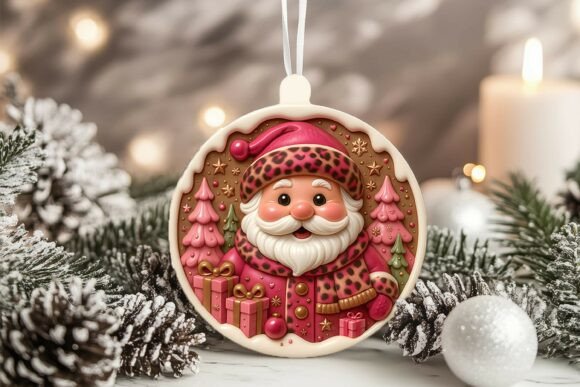
At first glance, the term "3D Porcelain" might suggest a physical object you can hold in your hand. However, in the context of modern digital art and print-on-demand services, it refers to a sophisticated graphic rendering technique. The 3D Porcelain Santa Christmas Ornament design utilizes shading, highlights, and texture mapping to create the illusion of depth and glossiness on a flat screen. When printed correctly, this visual trickery results in an image that appears to have the tactile quality of glazed ceramic.
This specific design features a classic Santa Claus figure rendered within a circular frame, perfect for round ornament templates. The "Porcelain" aspect implies a smooth, shiny finish, which is particularly effective when using sublimation printing methods on glossy substrates. Unlike standard flat vector graphics, this PNG file includes pixel-based details that simulate light reflection, giving the Santa figure a lifelike presence. For those seeking to add a touch of elegance and nostalgia to their holiday projects, this visual style bridges the gap between vintage charm and modern digital convenience.
Technical Specifications and File Quality
When working with digital assets, technical specifications are paramount to ensuring a professional final product. The 3D Porcelain Santa Christmas Ornament file provided by Mulew is designed with precision in mind. It comes in a PNG format, which stands for Portable Network Graphics. This format is crucial because it supports transparency, allowing the background to be invisible. This feature enables creators to place the Santa design over any color or pattern without an unsightly white box surrounding the image.
The resolution of the file is a significant factor in its usability. With a resolution of 300dpi (dots per inch), the image meets the industry standard for high-quality printing. At approximately 5 x 5 inches on the longest side, the file is substantial enough to cover large areas while retaining crisp edges. Whether you are printing a single card or producing a batch of mugs, the high DPI ensures that the intricate details of Santa's beard, suit, and the porcelain texture remain sharp and clear.
It is important to note that this is a raster-based image, not a vector file. While vectors (such as SVGs) are infinitely scalable without quality loss, a high-resolution PNG like this one allows for resizing within reasonable limits. You can scale the 3D Porcelain Santa Christmas Ornament down for small stickers or slightly up for larger decor items without noticeable pixelation, provided you stay close to the original dimensions. However, extreme enlargement beyond the native resolution may result in softness, so planning your project size beforehand is essential.
Unpacking and Managing Your Digital Files
One of the first steps after acquiring this digital resource is proper file management. The download typically arrives in a .ZIP compressed folder. This compression method reduces file size for faster downloading but requires extraction before use. Users must ensure they know how to unzip files on their PC or Mac to retrieve the actual PNG image inside. Without this step, the design remains inaccessible.
Furthermore, users should be aware that colors may vary depending on the device used to view the file and the printer used to output it. Monitors calibrate differently, and printers interpret color profiles uniquely. What looks like a deep, rich red on a calibrated monitor might appear slightly different on a t-shirt or mug. To mitigate this, professionals often print a test copy on standard paper before committing to expensive materials like sublimation blanks.
Practical Applications for Creators and Businesses
The versatility of the 3D Porcelain Santa Christmas Ornament extends far beyond a simple wall decoration. Its transparent background and high resolution make it suitable for a wide array of applications across various industries. Here are some of the most effective ways to utilize this digital asset:
- Sublimation Printing: This is perhaps the most popular use case. Sublimation involves transferring dye onto polyester fabrics or specially coated hard goods. The glossy nature of the porcelain effect pairs beautifully with sublimation mugs, tiles, and metal ornaments, creating a seamless, professional finish.
- Direct-to-Garment (DTG) Printing: For clothing lines, this design can be printed directly onto cotton or blend t-shirts. The detailed shading adds depth to fabric, making the Santa figure pop against the material.
- Heat Transfers and Stickers: Small businesses can cut these designs out of heat transfer vinyl or print them on sticker paper. These are excellent for quick inventory turnover during the busy holiday season.
- Card Making and Scrapbooking: Crafters can print the image on cardstock to create handmade greeting cards. The 3D effect adds a premium feel that distinguishes homemade cards from mass-produced ones.
- Wall Decor and Home Accents: By printing on canvas or mounting the image on wood, the design becomes a piece of home decor. It serves as a focal point for holiday displays without taking up physical shelf space until printed.
Who Benefits from This Digital Resource?
The value of the 3D Porcelain Santa Christmas Ornament lies in its accessibility to a diverse range of users. For the general consumer, it offers a way to personalize family gifts without the high cost of custom manufacturing. Parents can create matching ornaments for their children's trees, or crafters can produce unique party favors.
For professionals and business owners, such as Etsy sellers or local boutique owners, this file represents a low-risk investment. Since the product is digital, there is no inventory to store. You purchase the license once and can print unlimited copies at your own convenience. This scalability is ideal for testing market demand; if a specific design sells well, you simply print more. If it doesn't, you haven't wasted money on unsold stock.
Online content creators also benefit by using these images for social media posts, blog headers, or digital invitations. The high-quality render provides a polished look that enhances brand aesthetics during the holiday marketing cycle.
Considerations and Limitations
While the 3D Porcelain Santa Christmas Ornament is a powerful tool, it is not without limitations. The primary constraint is the file format itself. As noted, this is NOT A SVG file. SVG files are vector-based and can be resized to billboard size without losing quality. Because this is a PNG, it has a fixed resolution. If a user attempts to stretch the image significantly beyond its 5 x 5-inch native size, the image will become pixelated or blurry. Therefore, it is best suited for standard-sized projects like mugs, ornaments, and t-shirts rather than large-scale banners.
Additionally, the "digital only" nature of the product means the buyer receives no physical item. Some consumers may mistakenly expect a physical ornament to arrive in the mail. Clear communication regarding the digital delivery method is essential to avoid customer confusion. Buyers must possess the necessary hardware (printer, computer) and software knowledge to extract and utilize the files.
Color consistency is another practical consideration. As mentioned earlier, the vibrant colors seen on a screen may shift during the printing process. Different ink types and paper stocks absorb color differently. Professional users should always perform a test run to adjust color settings in their printing software to match the desired outcome.
Evaluating Suitability for Your Projects
Before integrating the 3D Porcelain Santa Christmas Ornament into your workflow, evaluate your specific needs. Ask yourself: Is the intended application compatible with raster images? Do I have the capability to print at 300dpi? Am I looking for a vector file for cutting machines like Cricut or Silhouette? If the answer to the last question is yes, this specific PNG might not be the right choice unless you plan to trace it manually.
However, if your goal is high-quality photographic reproduction on various surfaces, this file is an excellent choice. The realistic shading and transparent background provide a level of detail that flat clipart cannot match. It is particularly well-suited for projects where a "photorealistic" or "ceramic-like" finish is desired.
Conclusion
The 3D Porcelain Santa Christmas Ornament represents a fusion of traditional holiday aesthetics and modern digital efficiency. By offering a high-resolution, transparent PNG file, it empowers creators to bring a classic Santa design to life across a multitude of mediums. From sublimation mugs to personalized t-shirts, the possibilities are vast. While users must respect the technical limitations of raster files and manage expectations regarding color variance, the flexibility and quality of this digital asset make it a valuable addition to any holiday creative toolkit. Thank you for your support, and here's to a season filled with creativity and beautiful, personalized decorations.