Skill Keychain Digital 3d Printing File Evaluation
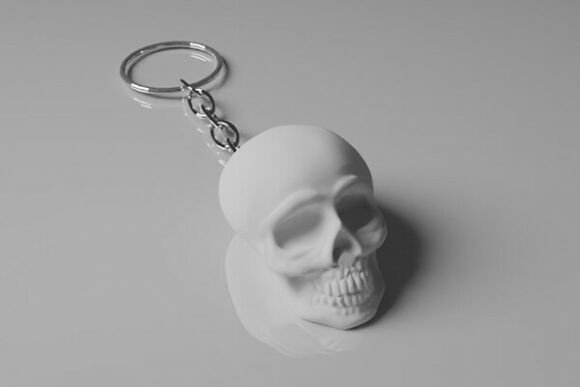
The Skull Keychain Digital 3d Printing File represents a specific category of digital assets designed for additive manufacturing enthusiasts. Unlike physical products, this offering is an STL file intended for download and subsequent fabrication on a 3D printer. For individuals exploring the realm of desktop manufacturing, understanding the nature of this digital product is essential before committing to a purchase. This guide evaluates the features, practical applications, and limitations associated with this specific design to assist in making an informed decision.
Understanding the Digital Asset
A Skull keychain – STL File for 3D Printing Digital Download is not a tangible object but rather a set of geometric instructions. The STL (Stereolithography) format describes the surface geometry of a three-dimensional object without representing color, texture, or other standard CAD model attributes. When a user acquires this file, they receive a data package compatible with slicing software, which translates the 3D model into machine-readable code (G-code) for their specific printer hardware.
This particular design emphasizes ease of use through a print-in-place mechanism. In traditional 3D printing, complex objects often require support structures that must be removed post-printing, or multiple parts that need gluing or snapping together. The Skull Keychain Digital 3d Printing File utilizes a design strategy where the keychain ring and the skull body are printed as a single unit. This eliminates the assembly phase, reducing the potential for human error during construction and streamlining the workflow from file to finished product.
Reasons for Interest in This Design
Several factors drive interest in specialized digital downloads like this one. First, the aesthetic appeal of a skull motif remains consistent across various subcultures, making it a versatile accessory. Second, the technical specifications of the file address common pain points in hobbyist 3D printing. Many users seek projects that validate their printer's capabilities without demanding excessive troubleshooting. A clean, high-quality geometry that is error-free ensures a higher success rate, particularly for those who may not yet have mastered advanced slicer settings.
Furthermore, the specification that the file was tested using PLA on a Bambu Lab A1 Mini provides a benchmark for performance. While printers vary, knowing a design has been validated on modern, reliable hardware offers confidence regarding its printability. Users interested in single-color prints also find value here, as multi-material setups can be expensive and complex. This design allows for a professional-looking result using standard filament, keeping material costs low while maximizing visual impact.
Benefits and Practical Advantages
The primary advantage of the Skull Keychain Digital 3d Printing File lies in its efficiency. The print-in-place design significantly reduces the time investment required after the print job completes. Without the need to glue parts or remove intricate supports, the finishing process is minimal. This makes the project ideal for batch production, allowing makers to create multiple units quickly for personal use or small-scale gifting.
Additionally, the "single-color print" feature simplifies material selection. Creators do not need to manage multiple spools of filament or worry about color blending issues. The clean geometry mentioned in the product description suggests that the model has been optimized to prevent common artifacts such as stringing or layer shifting, provided the printer is properly calibrated. This reliability is crucial for maintaining consistency when producing multiple items.
Another significant benefit is the immediate availability of the asset. As a digital download, there are no shipping delays or logistics involved. Once the transaction is complete, the file is accessible instantly, allowing the user to begin slicing and printing within minutes. This immediacy aligns well with the iterative nature of 3D printing, where rapid prototyping and quick turnaround times are often desired.
Tradeoffs and Considerations
Despite the advantages, there are tradeoffs to consider. The most critical factor is the requirement for ownership of a 3D printer. This digital file is useless without the appropriate hardware and materials. Potential buyers must evaluate whether they possess a printer capable of handling the specific tolerances required for a print-in-place hinge. If the printer lacks precision or suffers from calibration issues, the moving parts of the keychain may jam or fail to function smoothly.
Material choice also presents a consideration. While the design was tested with PLA, different filaments behave differently. PETG or ABS might offer greater durability for a keychain that will undergo frequent mechanical stress, but these materials may require heated beds and enclosures that the original testing did not utilize. Users must be prepared to adjust their printing parameters if they choose to deviate from the recommended PLA filament.
Furthermore, the copyright terms state that rights remain with the creator upon purchase. This implies that the buyer is acquiring a license to print the item for personal use, but likely not for commercial resale of the physical goods without explicit permission. Individuals looking to launch a business selling 3D printed skulls should verify the licensing agreement carefully to ensure compliance with intellectual property laws.
When This File Is a Strong Fit
The Skull Keychain Digital 3d Printing File is an excellent fit for hobbyists who own a relatively modern FDM (Fused Deposition Modeling) printer and wish to test their machine's capability with moving parts. It serves well as a portfolio piece for beginners demonstrating an understanding of print-in-place mechanics. Additionally, it is suitable for individuals seeking a unique, custom-made gift that cannot be easily found in retail stores. The ability to customize the color by choosing specific filament brands adds a personal touch that mass-produced items lack.
It is also a strong option for educators teaching the basics of 3D modeling and printing. Because the file is described as error-free and created with professional software, it removes variables related to bad mesh topology, allowing students to focus on the printing process itself rather than fixing model errors.
When Alternatives May Be Preferable
Conversely, alternatives should be considered if the user does not own a 3D printer. In such cases, purchasing a pre-printed physical keychain would be more cost-effective and time-efficient. Similarly, if the goal is to produce thousands of units for commercial distribution, injection molding or sourcing from a manufacturer might offer better economies of scale compared to individual 3D printing runs.
Users requiring extreme durability for heavy-duty tools or outdoor gear might also look beyond this design. While PLA is sufficient for light use, a keychain attached to a heavy bag or subjected to harsh environments may benefit from designs specifically engineered for metal-filled filaments or industrial-grade plastics, which might require different file formats or structural reinforcements not present in this standard STL.
Decision-Making Insights
To determine if this digital download aligns with your goals, assess your current equipment and skill level. If you have a functional printer and enjoy the process of creating physical objects from digital files, the Skull Keychain Digital 3d Printing File offers a streamlined, low-risk project. The emphasis on clean geometry and tested parameters reduces the likelihood of failed prints, making it a practical entry point for intermediate projects.
However, if you are looking for a plug-and-play solution without the learning curve of operating a 3D printer, or if you require commercial licensing for mass production, this product may not meet your needs. Ultimately, the value of this file is derived from your ability to leverage your existing hardware to transform digital data into a functional, aesthetic object. By weighing the convenience of a print-in-place design against the necessity of owning and maintaining a 3D printer, you can make a decision that best suits your creative and practical objectives.